BLOG
October 6, 2026
GWP IMMIGRATION LAW
Turning 18 Can Close the N-600K Door Permanently
Section 322 citizenship depends on a birthday you cannot negotiate with USCIS.
The interview and the Oath of Allegiance must both happen before your child turns 18. There is no extension, no waiver, and no exception for this deadline.
Updated October 6, 2026 · GWP Law · Las Vegas, NVTHE CONTEXT
Why the 18th Birthday Is a Hard Deadline
Section 322 of the Immigration and Nationality Act allows a U.S. citizen parent to obtain citizenship for a child born and residing abroad through Form N-600K.
The statute conditions this entire path on one fact: the child must be under 18 years of age at every step, not just at filing. This requirement sits directly in 8 U.S.C. § 1433.
We covered the filing basics of Form N-600K, including the $1,385 fee, in our companion post on who qualifies for citizenship under Section 322.
This post addresses a narrower and higher-stakes question: what happens when the child’s 18th birthday arrives before USCIS finishes the case.
USCIS Policy Manual Volume 12, Part H, Chapter 5 makes clear that both the in-person interview and, for applicants 14 or older, the Oath of Allegiance must be completed while the applicant is still under 18.
See the full eligibility and procedural framework at the USCIS Policy Manual.
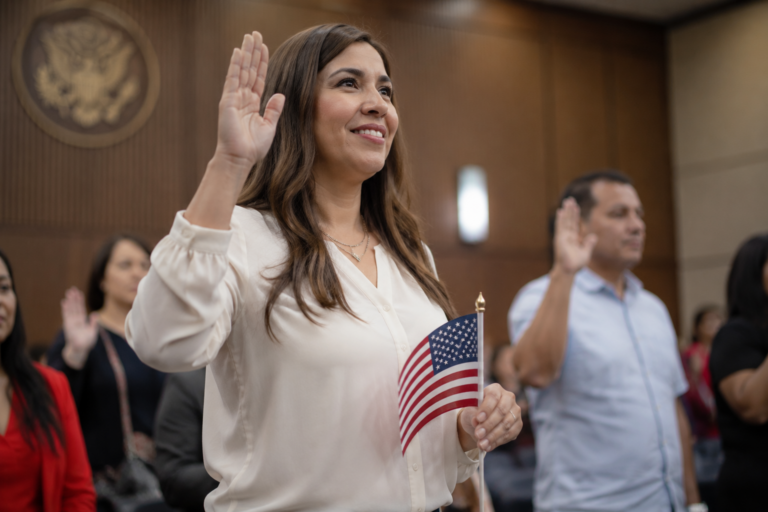
The oath is waived only for children under 14 who cannot understand its meaning.
For a child 14 or older, skipping the oath is not an option, and neither is scheduling it a week after the birthday.
Processing times for Form N-600K vary by field office and change throughout the year.
A family cannot control exactly when USCIS will schedule an interview, which is what makes the age cutoff genuinely risky rather than a theoretical concern.
We explain why these timelines can run long, and whether an interview is even required in every case, in our companion post on the N-600K interview requirement.
Because of that variability, immigration practice generally recommends filing Form N-600K years before the child’s 18th birthday, not months before it.
Once the case is pending, we also recommend requesting the interview well ahead of the deadline — many practitioners use roughly 90 days before the 18th birthday as an internal safety margin.
That 90-day figure is practice guidance, not a USCIS rule. The actual legal requirement is simply “before age 18,” with no built-in cushion.
It also helps to be precise about what “under 18” actually requires, because it is easy to misread as a filing deadline rather than a completion deadline.
Filing the Form N-600K itself before the child turns 18 is necessary, but it is not sufficient.
USCIS must also complete the interview and, for children 14 and older, the oath, all before that same birthday.
A case filed the week before a child turns 18 is technically timely, but it leaves essentially no room for USCIS to schedule anything before the deadline arrives.
This is also where Section 322 differs sharply from other immigration processes families may have heard about.
A pending Form I-130 family petition can sometimes benefit from Child Status Protection Act age calculations that treat a child as younger than their actual age for classification purposes.
A pending Form N-600K has no equivalent protection.
There is no freeze, no age calculation, and no motion to reopen based on the case having been filed while the child was still a minor.
Once the birthday passes without both the interview and the oath completed, Section 322 eligibility ends, and it ends permanently for that child.
Source: 8 CFR § 106.2 (filing fees); 8 U.S.C. § 1433, cited above.
A REAL CASE
The Family That Filed Eight Months Before the Birthday
A father called me after filing Form N-600K for his 17-year-old son on his own.
The son’s 18th birthday was eight months away.
I reviewed the filing date, the local field office’s general caseload, and the fact that no interview had been scheduled yet.
Eight months does not guarantee an interview will happen in time, let alone an interview plus an oath ceremony.
I filed a request asking USCIS to expedite scheduling given the approaching birthday, and I documented the age deadline clearly in that request.
The interview was scheduled with about ten weeks to spare.
The oath was administered at the same appointment, three weeks before the son turned 18.
Had the interview landed even one month later than it did, this case would have been denied on the birthday alone, regardless of how strong the underlying eligibility was.
I have also reviewed cases that did not go this way — filed with a year or less of runway, where the interview notice simply did not arrive before the birthday, and the case was closed.
In those cases, the family’s only remaining option was to start over through Form I-130.
None of those families had done anything wrong on the merits of their case.
The underlying relationship to the U.S. citizen parent was never in question.
What decided the outcome, in every instance, was simply how much runway existed between the filing date and the birthday.
What to Do Before the Birthday Becomes a Problem
THE PATH FORWARD
If the Case Is Denied, the Family-Based Route Is the Only Way Back
A Section 322 denial for aging out does not end the possibility of a green card and eventual citizenship — it just moves the family onto a slower, different track.
That track starts with a U.S. citizen parent filing Form I-130, Petition for Alien Relative, for the now-adult child.
The current filing fee is $675, per 8 CFR § 106.2, the same fee schedule cited above.
Where that petition lands in the visa system depends on the child’s age and marital status at filing.
An unmarried child who was still under 21 when the I-130 was filed may qualify as an immediate relative (IR-2) if Child Status Protection Act calculations preserve that classification — a distinct statute from the one governing N-600K, discussed further below.
An unmarried child 21 or older at filing falls into the F1 preference category.
A married child, regardless of age, falls into the F3 preference category.
F1 and F3 are both subject to annual numerical limits and can carry visa bulletin waits measured in years, not months.
How long that wait actually runs depends heavily on the child’s country of birth, since some countries have significantly longer backlogs than others in these categories.
We walk through what happens procedurally once an I-130 is approved, including National Visa Center processing, in our guide to next steps after I-130 approval.
We also cover the most common reasons these petitions get denied in our guide to I-130 denials.
It is worth being precise about one distinction: the Child Status Protection Act and the N-600K age rule are not the same law, and they do not behave the same way.
Section 322’s “under 18” line is fixed — once it passes, the case is denied, with no recalculation available.
CSPA, by contrast, applies to family-based petitions like the I-130 and can sometimes calculate a child’s age as younger than their actual age for classification purposes, depending on when the petition was filed and other case-specific factors.
Once an immigrant visa becomes available and the green card is issued, the standard naturalization clock begins.
Form N-400 generally requires 5 years as a lawful permanent resident, with at least 30 months of physical presence in the United States during that period.
The current N-400 filing fee is $760, reduced to $380 for applicants with household income at or below 400% of the Federal Poverty Guidelines, and waived entirely for qualifying military service under INA §§ 328 and 329.
Those fees and the reduced-fee criteria are set out in the same 8 CFR § 106.2 schedule.
That naturalization process is the standard N-400 route, separate from the shortened 3-year timeline available to spouses of U.S. citizens, which does not apply to children who aged out of Section 322.
The comparison above makes the stakes concrete: a case completed before 18 ends in citizenship with one filing and one fee.
A case that ages out can still end in citizenship, but only after a second petition, a possible multi-year visa bulletin wait, a green card, and five more years of residence.
The legal outcome can be the same. The timeline is not.
References
- 8 U.S.C. § 1433 (INA § 322)
- USCIS Policy Manual, Volume 12, Part H, Chapter 5
- 8 CFR § 106.2 — USCIS Filing Fee Schedule
Filing Timing Is the Single Biggest Risk in Section 322 Cases
An attorney can review your child’s age against realistic processing timelines before you file, not after.
Book a Consultation →This article is for informational purposes only and does not constitute legal advice. Consult a qualified immigration attorney before taking any action. · Last verified: October 6, 2026 · Reviewed by: Kathia Quirós, Immigration Attorney · GWP Immigration Law