BLOG
July 29, 2026
GWP IMMIGRATION LAW
An Immigration Bond Buys Time — It Doesn’t End the Case
An immigration bond is a financial guarantee that can secure release from ICE custody while a removal case moves forward.
A federal circuit split over ICE’s expanded no-bond detention policy is now before the Supreme Court, and the outcome could decide who even gets a bond hearing in the first place.
Updated July 29, 2026 · GWP Law · Las Vegas, NVTHE CONTEXT
Why Bond Eligibility Is Shifting in 2026
Not every person detained by ICE is entitled to a bond hearing.
The Immigration and Nationality Act splits custody into two tracks: discretionary detention under INA §236(a), where a judge can set a bond, and mandatory detention under INA §236(c), where release on bond is barred by law.
In July 2025, DHS reinterpreted INA §235(b) to treat anyone who entered the country without inspection — even decades ago — as an “applicant for admission.”
ICE argues that classification carries no right to a bond hearing before a judge at all.
The Second, Third, Sixth, and Eleventh Circuits have rejected that reading and require individualized bond hearings; the Fifth and Eighth Circuits have upheld it.
The administration asked the Supreme Court to resolve the split on June 26, 2026, not long after the Court’s June 2026 ruling on birthright citizenship.
Separately, the Laken Riley Act — signed into law in January 2025 — added its own no-bond category: a person merely arrested or charged with a theft-related offense can now be held without bond, regardless of whether they are convicted.
Bond amounts vary widely in practice — the table below shows the statutory floors alongside the most recent nationwide median.
| Bond type | Amount |
|---|---|
| Standard delivery bond — statutory minimum | $1,500 |
| Voluntary departure bond — statutory minimum | $500 |
| Nationwide median bond set by judges (TRAC, June 2025) | $3,500 |
| Statutory maximum | None — set case-by-case, based on ability to pay |
To qualify for release on the discretionary track, the detainee carries the burden of showing they are not a danger to the community and not a flight risk.
Someone placed in the mandatory track by mistake can request a “Joseph hearing” to argue it is substantially unlikely the government will prevail on the charge that triggers mandatory detention — a threshold fight over eligibility, not over the amount.
The mandatory-detention categories under INA §236(c) that block a bond hearing altogether include:
- Aggravated felony convictions
- Controlled substance offenses
- Two or more crimes involving moral turpitude
- Firearms offenses
- Domestic violence convictions
- Terrorism-related grounds
- “Arriving aliens” stopped at a port of entry
Source: INA §236(a)–(c); Matter of Joseph, 22 I&N Dec. 799 (BIA 1999).
A REAL CASE
A Bond Set Too High
A woman called me last spring after ICE detained her husband at a routine check-in.
ICE had already set an initial bond at $25,000, an amount the family had no way to pay.
I requested a bond redetermination hearing and filed a packet built around his ten years of steady employment, his U.S. citizen children, and letters from his church.
The judge lowered the bond to $7,500 after a de novo review of the record.
He was released within 48 hours of payment, and the removal case is still proceeding on its own separate timeline.
What To Do Right Now
After an arrest, an ICE officer makes an initial custody determination and records it on Form I-286 — release, a bond amount, or continued detention.
If that amount is too high, or ICE denies bond outright on a discretionary case, the next step is asking a judge to reconsider it.
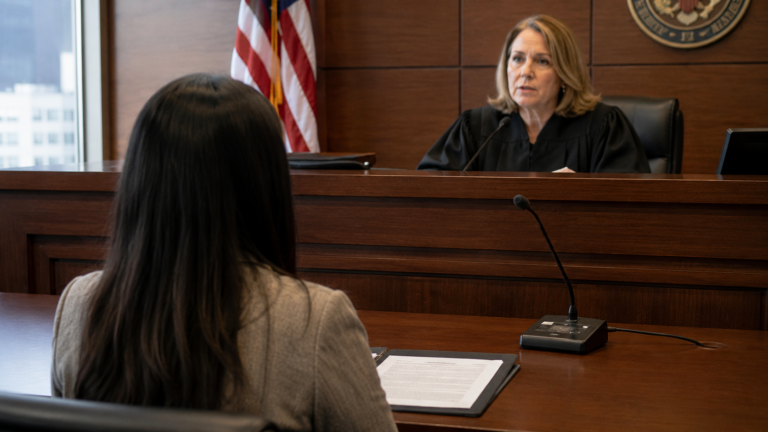
A bond hearing can be requested by oral petition at the first hearing, by written motion, or by letter from the detention center.
If the judge denies bond or the government appeals a grant, either side has 30 days to file Form EOIR-26 with the Board of Immigration Appeals; a government appeal can trigger an automatic stay that keeps the person detained while it is pending.
THE PATH FORWARD
What Happens After the Bond Is Paid
Payment triggers release, but it does not resolve the underlying case.
The released person must appear at every hearing and comply with any final order, or the bond is forfeited under INA §236(b) and ICE can re-detain them.
When the case concludes with every condition met, ICE issues Form I-391 and mails it to the obligor’s last address on file.
The obligor sends that form, together with the original Form I-305 receipt, to the Debt Management Center, Attention: Bond Unit, P.O. Box 5000, Williston, VT 05495-5000.
Processing typically takes about four weeks from there, though it can run longer; the Debt Management Center can be reached at (802) 288-7600 to check status.
If the original I-305 receipt is lost, a notarized Form I-395 affidavit takes its place — and any change of address should be reported to ICE promptly, since a missed Form I-391 is the most common reason a refund stalls.
Bond secures release; it does not defend the case.
Our deportation defense team begins building the merits of the removal case while bond proceedings move forward on a separate track.
Given the pending Supreme Court review of the “applicant for admission” policy, anyone detained after a prior entry without inspection should get counsel involved before assuming they are ineligible for bond.
References
- 8 U.S.C. §1226 — Apprehension and Detention of Aliens
- 8 U.S.C. §1225 — Inspection by Immigration Officers
- Matter of Joseph, 22 I&N Dec. 799 (BIA 1999)
- Laken Riley Act, S.5, 119th Congress
- U.S. ICE — Post a Bond (CeBONDS)
- Form I-352, Immigration Bond
- Form EOIR-26, Notice of Appeal
- TRAC Immigration — Increasing Success with Bond Motions in Immigration Court (Jul. 16, 2025)
Detained by ICE or Facing a High Bond?
Every hour in custody works against the case — talk to our team before the next hearing.
Book a Consultation →This article is for informational purposes only and does not constitute legal advice. Consult a qualified immigration attorney before taking any action. · Last verified: July 29, 2026 · Reviewed by: Kathia Quirós, Immigration Attorney · GWP Immigration Law