BLOG
July 28, 2026
GWP IMMIGRATION LAW
The U Visa Backlog Hasn’t Moved. The Rules Around the Wait Have.
Current backlog figures, the Bona Fide Determination timeline, and two new BIA rulings that change what victims in removal proceedings can rely on while they wait.
The U visa waitlist remains one of the longest in the immigration system. Two Board of Immigration Appeals decisions issued earlier this year also changed what petitioners in removal proceedings can rely on while their case is pending.
Updated July 28, 2026 · GWP Law · Las Vegas, NVTHE CONTEXT
Why the Wait Keeps Growing in 2026
Congress created the U visa in October 2000 through the Victims of Trafficking and Violence Protection Act, adding INA §101(a)(15)(U) to protect victims of qualifying crimes who cooperate with law enforcement.
The regulations implementing it sit at 8 CFR §214.14, and the separate rule for adjusting to a green card afterward is at 8 CFR §245.24.
The statute caps principal U-1 approvals at 10,000 per fiscal year, no matter how many qualifying petitions USCIS receives. Immigration practices tracking USCIS data estimate the pending inventory topped 250,000 petitions in early 2026, most filed years before they can be reached under that cap.
As of March 2026, USCIS was still issuing final U-1 approvals to petitioners who filed between October 2017 and December 2018. That puts the realistic wait from filing to final visa approval at roughly seven to eight years for most petitioners today.
The certification step compounds those numbers before the federal clock even starts. Because signing Form I-918 Supplement B is discretionary for each law enforcement agency, petitioners in some jurisdictions wait months for a signature that other jurisdictions grant routinely.
Not every delay comes from the cap itself. Petitioners who are inadmissible must also file Form I-192, a waiver USCIS adjudicates together with the underlying I-918 — U visa applicants owe no filing fee for it, but it still adds its own evidentiary burden to the file.
USCIS has also tightened what counts as a bona fide petition. Practices report the agency is denying more Bona Fide Determination requests outright when a filing includes only the forms and a law enforcement certification, without a personal statement or corroborating evidence of the abuse suffered.
Four stages currently make up that wait:
- Filing and biometrics. A receipt notice issues within weeks; USCIS then confirms the petition is complete before background checks begin.
- Bona Fide Determination (BFD). A growing share of petitioners now wait roughly 24 to 35 months for this initial review under the USCIS Policy Manual, Volume 3, Part C, Chapter 5, which can bring a four-year renewable work permit and deferred action.
- The visa-number queue. After the BFD, the petition re-enters line for one of the 10,000 annual visa numbers — currently seven to eight years from filing, as above.
- Adjustment of status. After three continuous years in U nonimmigrant status, Form I-485 processing typically adds another 18 to 36 months.
Source: Matter of Ibarra-Vega, 29 I&N Dec. 476 (BIA 2026).
That table matters because of a shift most general U visa guides have not caught up to yet.
On February 27, 2026, the BIA decided Matter of Ibarra-Vega, 29 I&N Dec. 476 (BIA 2026), holding that administrative closure over DHS objection is inappropriate when a U visa number is not available in the reasonably near future.
The Board went further and set a presumption: closure lasting longer than six months is presumptively unreasonable, absent unique circumstances.
A companion decision, Matter of Medina-Madrid, 29 I&N Dec. 514 (BIA 2026), applied the same six-month presumption to a respondent awaiting a provisional unlawful-presence waiver — signaling the BIA intends to extend the standard well beyond U visa cases.
For anyone whose removal case is closed while a U visa is pending, a bare receipt notice is no longer enough to keep it that way. A documented Bona Fide Determination and deferred-action grant give an immigration judge something concrete to weigh against DHS’s motion to recalendar.
The same rulings reach derivative family members, too. Immigration judges have denied closure to U-2 or U-3 relatives in removal proceedings unless the relative independently documents the qualifying relationship, such as a marriage certificate, even after USCIS already found them prima facie eligible.
A second, separate change affects the other end of the process. On May 21, 2026, USCIS issued Policy Memorandum PM-602-0199, directing officers to treat adjustment of status as an extraordinary, disfavored form of discretionary relief rather than a routine benefit.
The memo does not change who is eligible to adjust status under 8 CFR §245.24, and it targets conduct like failing to depart after a nonimmigrant admission’s purpose ended — a factor less likely to apply to most U visa holders. Even so, it signals agency-wide heightened scrutiny that U visa holders reaching their three-year mark should expect when Form I-485 is finally reviewed.
A REAL CASE
A Client Waiting on Both Fronts
A domestic violence survivor came to me last year with a certified Form I-918 Supplement B and a receipt notice, three years into removal proceedings.
Her case had no Bona Fide Determination and no deferred action on record, even though the underlying petition had been pending for years.
I requested adjudication of the BFD, documented her continued cooperation with the police department that had certified her petition, and received the deferred-action grant and four-year EAD within several months.
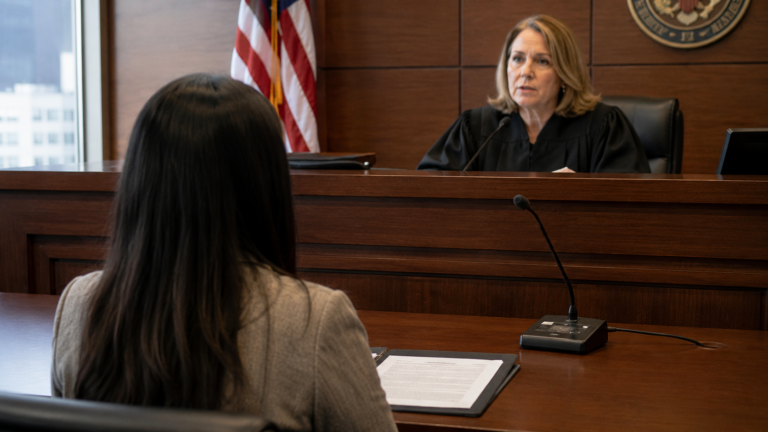
That documentation became the evidence her immigration judge needed to keep her case administratively closed after DHS moved to recalendar it under Matter of Ibarra-Vega.
She is still on the waitlist for a final visa number, alongside roughly a quarter million other petitioners.
Her four-year work permit renews in the meantime, and her removal case stays closed as long as her BFD record stays current.
How to Check Your Status in 2026
THE PATH FORWARD
What Changed, and What Didn’t
The annual cap and the years-long wait for a visa number have not changed in 2026. No bill currently moving through Congress would raise it.
The U.S. Citizenship Act of 2021 proposed raising the cap from 10,000 to 30,000, but that bill died with the 117th Congress and was never reintroduced with the same terms.
What changed instead is the legal environment surrounding the wait itself. Administrative closure is no longer a reliable holding pattern, and adjustment of status is now framed as extraordinary relief rather than a routine benefit.
Advocacy groups continue to press Congress to raise the cap, but with no relief scheduled, the practical lever for most petitioners is the record built now: a complete BFD file, documented deferred action, and a clean continuous-presence history.
For most petitioners, that makes an early, well-documented BFD request and a careful continuous-presence record more important than they were a year ago, not less.
If your case touches removal proceedings, our practical guide on what to do if ICE comes to your door covers steps that also protect a pending U visa claim.
Petitioners weighing an inadmissibility issue alongside their U visa may find our overview of extreme hardship waivers useful.
Those approaching their three-year mark should also read our comparison of adjustment of status versus consular processing.
Survivors deciding whether VAWA or a U visa fits their situation can start with our piece on common mistakes in VAWA self-petitions.
References
- USCIS, Victims of Criminal Activity: U Nonimmigrant Status
- 8 CFR §214.14, Alien Victims of Certain Qualifying Criminal Activity (eCFR)
- 8 CFR §245.24, Adjustment of Aliens in U Nonimmigrant Status (eCFR)
- USCIS, Form I-918, Petition for U Nonimmigrant Status
- USCIS Policy Manual, Volume 3, Part C, Chapter 5 — Bona Fide Determination Process
- Matter of Ibarra-Vega, 29 I&N Dec. 476 (BIA 2026)
- Matter of Medina-Madrid, 29 I&N Dec. 514 (BIA 2026)
- CLINIC, The BIA and Administrative Closure of Removal Proceedings: Matter of Ibarra-Vega and Matter of Medina-Madrid (March 27, 2026)
- USCIS Policy Memorandum PM-602-0199, Adjustment of Status and Discretion (May 21, 2026)
- USCIS Case Status Online
- myUSCIS Account
- EOIR Automated Case Information
- USCIS, Form I-192, Application for Advance Permission to Enter as a Nonimmigrant
- U.S. Citizenship Act of 2021, bill summary
Waiting on a U visa is not the same case it was a year ago.
Bring your receipt notice and case history to a confidential intake so we can map the fastest path available under current USCIS and BIA rules.
Book a Consultation →This article is for informational purposes only and does not constitute legal advice. Consult a qualified immigration attorney before taking any action. · Last verified: July 28, 2026 · Reviewed by: Kathia Quirós, Immigration Attorney · GWP Immigration Law