BLOG
September 8, 2026
GWP IMMIGRATION LAW
Evidence wins O-1 Visa cases. Titles and enthusiasm do not.
A complete O-1 filing has four moving parts, and missing any one of them stalls the case.
Between the petitioner structure, the required advisory opinion, and current USCIS filing fees, most delays are avoidable with the right preparation.
Updated September 8, 2026 · GWP Law · Las Vegas, NVTHE CONTEXT
The Four Pieces Every O-1 Petition Needs
An individual cannot file for their own O-1 status directly, a qualifying petitioner must sponsor the case on Form I-129.
There are three ways to structure that sponsorship, and each fits a different work situation.
A traditional U.S. employer can file directly, though a job change later requires an entirely new I-129 petition, since O-1 status is not transferable between employers.
A U.S. agent can file on behalf of a beneficiary who works for multiple employers or on a project basis, provided the filing includes a contract and a detailed itinerary of the work.
Since the January 2025 policy update, a separate legal entity the beneficiary owns, such as an LLC or corporation, may also file as the petitioner, under USCIS Policy Alert PA-2025-02.
That path only works if the entity can show a genuine employer-employee relationship, meaning the entity, not the beneficiary personally, controls hiring, firing, and supervision.
A sole owner who is also the only employee, with no board or other control mechanism, is the profile USCIS scrutinizes most closely in this structure.
Second, every O-1 petition needs a written advisory opinion, sometimes called a consultation, from an appropriate peer group.
For O-1A, that is typically a peer organization in the beneficiary’s field.
For O-1B in the arts, it is a labor union or a recognized peer group, and for motion picture or television work, USCIS requires two separate consultations: one from the relevant labor union and one from a management organization, under USCIS Policy Manual, Volume 2, Part M, Chapter 6.
A negative advisory opinion is not automatically fatal to the case, but it carries real weight in USCIS’s final decision, so it should never be requested without full supporting evidence.
In practice, unions such as SAG-AFTRA, the Directors Guild of America, and the American Federation of Musicians each maintain their own O-visa consultation process and their own turnaround times and fees, which should be built into the overall filing timeline rather than treated as a formality.
An exception exists where no appropriate peer group is available: in that narrow situation, USCIS may accept the petition without a consultation, but the petitioner still has to show that no relevant group exists for the beneficiary’s field.
Third, the petition needs a signed contract or summary of the terms of employment, plus an itinerary of the events or activities for agent-filed cases.
The requested validity period should track that contract or itinerary directly, since USCIS generally approves the case for the time needed to complete the specific work described, up to three years for an initial petition.
A petition that asks for three years but documents only a six-month engagement invites questions the case does not need to face.
Fourth, and most consequential, is the documentary evidence supporting the extraordinary ability or achievement criteria, discussed in our companion post on who qualifies for O-1 classification.
Source: USCIS Policy Manual, Volume 2, Part M, Chapter 6.
A REAL CASE
The Founder Who Tried to Sponsor Himself
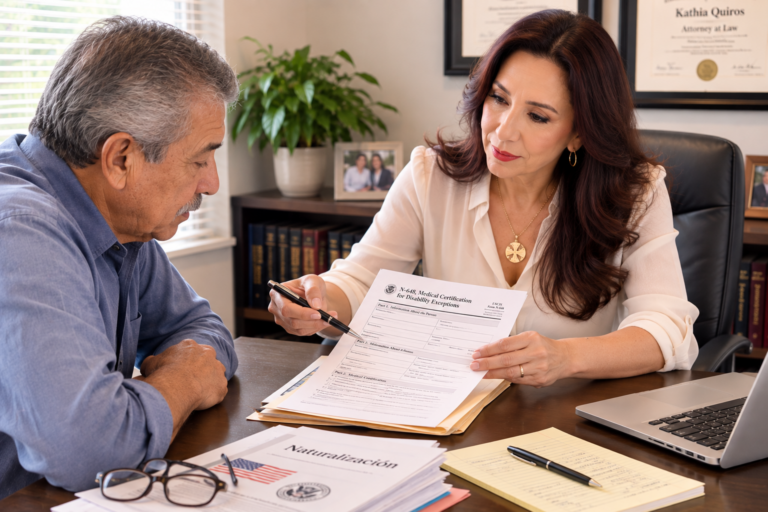
A startup founder came to me after filing his own O-1 petition through his single-member LLC, without counsel.
USCIS issued a request for evidence questioning whether a genuine employer-employee relationship existed, since he was the sole owner, sole employee, and sole decision-maker.
We restructured the response around an advisory board with real authority to remove him, documented in the company’s operating agreement.
We also submitted board resolutions showing the board, not the founder alone, had approved his compensation and role.
The case was approved, but it cost him a three-month delay that a properly structured initial filing would have avoided.
What to Prepare Before You File
THE PATH FORWARD
Preparation Prevents the Request for Evidence
Most O-1 requests for evidence trace back to one of two subjective criteria: original contributions of major significance, and a critical or essential role for a distinguished organization.
Both require more than a job description, they require third-party evidence that explains why the contribution or role mattered to the organization or the field.
Weak petitions tend to repeat the beneficiary’s own description of their work across multiple exhibits, instead of letting independent sources establish the same point from different angles.
A stronger file pairs each criterion with a different type of source, so a reviewing officer sees the same conclusion confirmed by, for example, a supervisor’s letter, internal metrics, and independent press coverage rather than one voice repeated three times.
A petition assembled around that standard, with the petitioner structure and advisory opinion handled correctly the first time, moves faster and survives scrutiny better than one assembled around optimism.
References
- USCIS Form I-129, Petition for a Nonimmigrant Worker
- USCIS Policy Alert PA-2025-02, January 8, 2025
- USCIS Policy Manual, Volume 2, Part M, Chapter 6 — O-2 and O-3 Nonimmigrants
- Federal Register, Adjustment to Premium Processing Fees, January 12, 2026
Building your evidence file from scratch?
We structure the petitioner relationship, the advisory opinion request, and the evidence package together, so nothing arrives at USCIS out of order.
Book a Consultation →This article is for informational purposes only and does not constitute legal advice. Consult a qualified immigration attorney before taking any action. · Last verified: August 28, 2026 · Reviewed by: Kathia Quirós, Immigration Attorney · GWP Immigration Law